


New research led by Kamiar Mohaddes' climaTRACES Lab and Boston Consulting Group shows the economic risk of not tackling climate change
It is clear that climate change will reduce income in all countries and across all sectors, affecting industries ranging from transport to manufacturing and retail, not only agriculture and other sectors commonly associated with nature.
Kamiar Mohaddes
There is a strong economic case for investing in climate mitigation and adaptation because there are significant economic consequences of failing to do so, according to a new report.
The report says that allowing global warming to reach 3°C by 2100 could reduce cumulative economic output by 15% to 34%. Alternatively, investing 1% to 2% in mitigation and adaptation would limit warming to 2°C, reducing economic damages to 2% to 4%. This net cost of inaction is equivalent to 11% to 27% of cumulative GDP – equivalent to three times global healthcare spending, or eight times the amount needed to lift the world above the global poverty line by 2100.
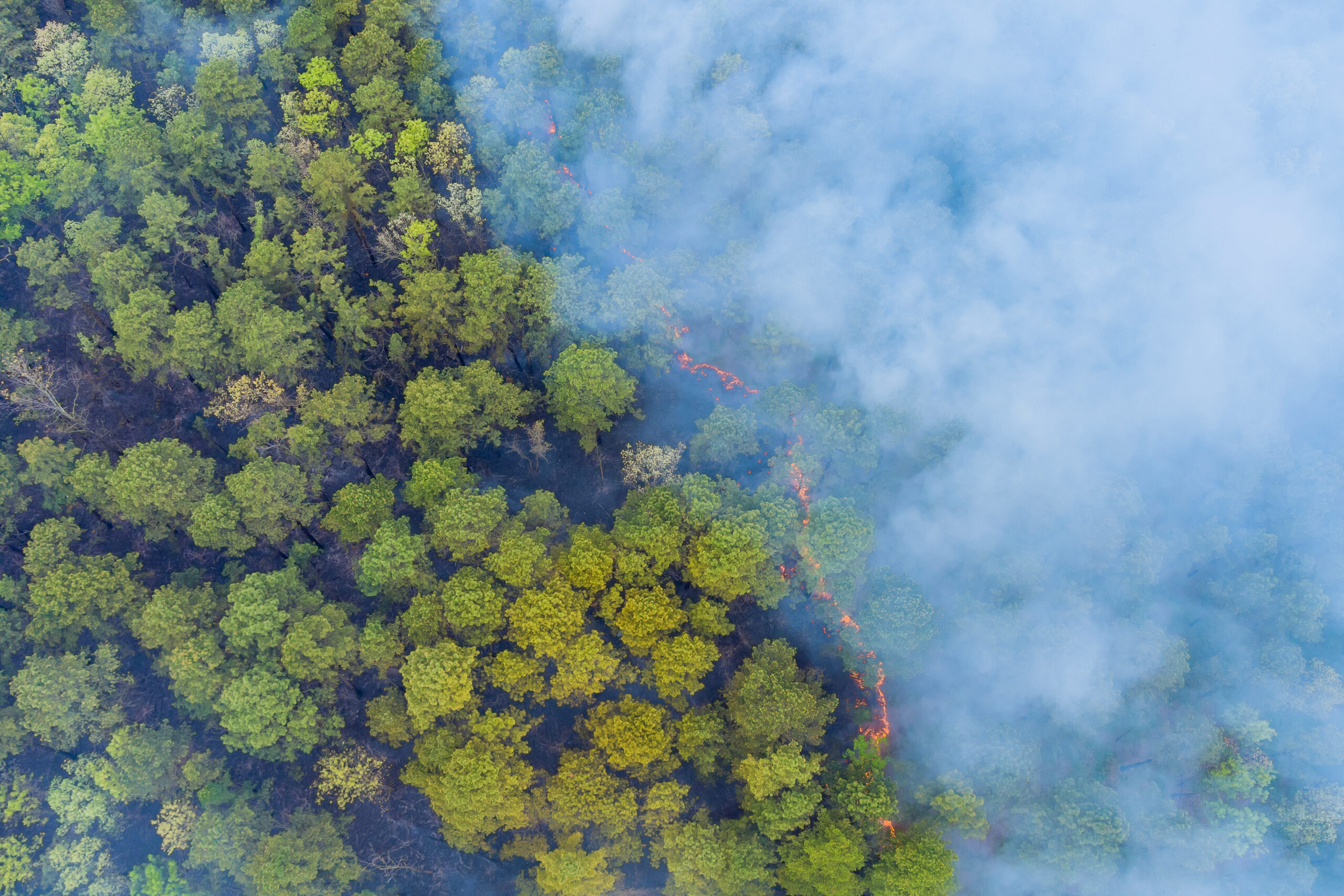
Forest in California with panoramic aerial wildfire is burning trees smoke fire dry grass
The report, Too Hot to Think Straight, Too Cold to Panic: Landing the Economic Case for Climate Action With Decision Makers, is published today by Boston Consulting Group’s Climate Change and Sustainability Consulting experts, Cambridge Judge Business School and the University of Cambridge’s climaTraces Lab.
“Research on climate change impacts across all regions and sectors is expanding rapidly,” said co-author Gates Cambridge Scholar Kamiar Mohaddes, an Associate Professor in Economics and Policy at the Cambridge Judge Business School and Co-Director of the University of Cambridge climaTRACES Lab. “What stands out is that productivity loss – not merely capital destruction – is the primary driver of economic damage. It is also clear that climate change will reduce income in all countries and across all sectors, affecting industries ranging from transport to manufacturing and retail, not only agriculture and other sectors commonly associated with nature.”
Climate action investment must be frontloaded
 The report says mitigation is the most cost-effective means of reducing the economic damages of climate change; it can return as much as five to 14 times the original investment. At the same time, adaptation is critical to minimising damages, particularly in the next couple of decades. To limit global warming to 2°C by 2100, the report suggests that mitigation investments must increase ninefold and adaptation thirteenfold by 2050. The challenge lies in the timing of climate investments – 60% must be committed before 2050, while 95% of the economic damage from inaction would occur after that point, says the report.
“The economic case for climate action is clear, yet not broadly known and understood,” said Annika Zawadzki, managing director and partner at management consultancy firm Boston Consulting Group [BCG] and a co-author of the report. “Investment in both mitigation and adaptation could bring a return of around tenfold by 2100.”
Priorities to address the barriers to action
Another challenge the report highlights is that the costs and benefits of the transition are not evenly distributed among countries. Even so, it says the net cost of inaction is high enough that it will likely justify unilateral action from the world’s biggest emitters. The report looks at five priority levers that can be pulled to address these challenges:
- Reframe the debate on the costs of climate change
- Create transparency on net cost of inaction across
- Strengthen national climate policies to accelerate mitigation and adaptation
- Reinvigorate international cooperation on climate change
- Advance our understanding of the net cost of inaction
Kamiar [2005] co-founded the climaTRACES Lab in May 2024 with fellow Gates Cambridge Scholar Ramit Debnath [2018]. It is an interdisciplinary research initiative which brings together climate, nature and sustainability research. The focus is on data-driven research and policy engagement, covering communication and communities, economic policy and markets, green and sustainable finance, and nature and biodiversity.
*To read more click here.
**Pictures are taken from the report.