

Anthony Lane to give a Gates Distinguished Lecture
Leading film critic Anthony Lane will speak about the representation of violence in a public lecture this week.
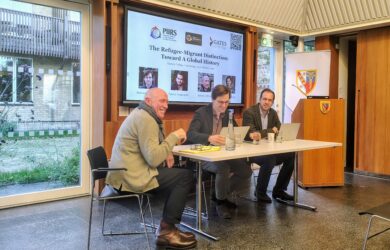
Lane, a film critic and staff writer on The New Yorker, will give a Gates Distinguished Lecture entitled Don’t Look Now on 10th November at Gonville and Caius College.
He describes his talk as “a brief enquiry into representations of violence, taking in examples from literature, painting, photography and film”.
Lane, who lives in Cambridge, graduated with a degree in English from Trinity College and is now an Academic Associate of Pembroke College. He has been working for The New Yorker since 1993. Nobody’s Perfect, a collection of his New Yorker articles, was published in 2002.
Lindsay Chura, external officer of the Gates Scholars Council who organised the talk, said: “Anthony Lane’s writing brings to light the art of film and reminds us all of the important place film and cinematography have in our contemporary culture.”
The talk begins at 6.30pm in the Bateman Auditorium and is open to university members and accompanied guests.