

Feminist magazine co-edited by Marina Velickovic wins UN award.
A feminist magazine co-edited by Gates Cambridge Scholar Marina Velickovic has won an award from the United Nations Population Fund in Bosnia and Hercegovina.
The award from the UNFPA is bestowed on individuals and civil society organisations that oppose social stereotypes, eliminate prejudices against marginalised groups and, through various activities, make a significant contribution to the promotion of human rights.
Awards were granted in four key UNFPA priority areas at a ceremony held on December 13th at Tarčin Forest Resort and Spa in Bosnia and Hercegovina as a part of an annual UNFPA meeting with partners.
The award for Bona, the magazine Marina co-edits, came in the category “Adolescents and youth, with the focus on sexual and reproductive health”. It was selected for its reporting on current topics – in particular an issue on reproductive health, for its content quality, as well as its writing on personal experiences on related topics, which the UNFPA say contribute to the empowerment of young people, primarily girls and women.
Bona is a magazine for feminist theory and art. Every issue has a theme. Marina said: "This award means a lot to our small, but diligent editorial team."
Marina [2017] is doing a PhD in Law, analysing the International Criminal Tribunal for the former Yugoslavia as a site of knowledge production and looking at how different narratives are produced there, incorporating Feminist critiques, Critical Legal Studies and Third World Approaches to Law to explore where the blind spots are with relation to gender and ethnicity.
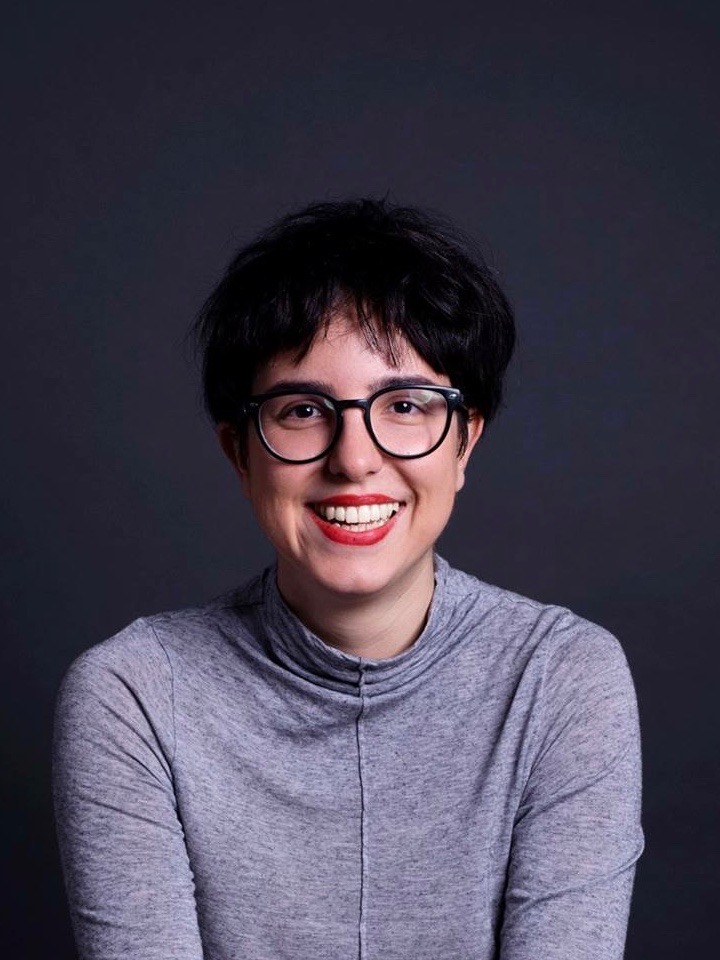
Marina Velickovic
- Alumni
- Bosnia and Herzegovina
- 2017 PhD Law
- Pembroke College
My interest in International Criminal Law as a field of study grew out of the internship I did at the ICTY, during my second year at the University of Bristol. I was fascinated by the discrepancies in practice of International Criminal Law and what I was being taught. I wanted to further explore this during my LLM at the LSE, where I researched how the ICTY produces a narrative about Bosnia as a gendered and ethnicized “other.” Since graduating from the LSE I have co-authored two books and co-founded the only feminist magazine in Bosnia. I am currently a Visiting Fellow at Goldsmiths College, where I am working on a feminist critique of the legal discourse surrounding Conflict-Related Sexual Violence. At Cambridge my research will explore ICL as a site of knowledge production through the prisms of Critical Legal Studies, Feminist Legal Scholarship and Third World Approaches to Law. This research is important because it will not merely explore how the ICTY produces knowledges about Bosnia that are ethnicized and gendered, but also at how these knowledges (and the process of their production) produce a certain truth about the wider project of International Criminal Law (ICL). I will seek to explore to what extent the very survival of ICL is contingent on the ascendance of particularly gendered and ethnicized knowledges to the status of truth. I am incredibly humbled to be the first scholar from Bosnia to be joining the Gates Cambridge Community.
Previous Education
University of Bristol
London School of Economics and Political Science